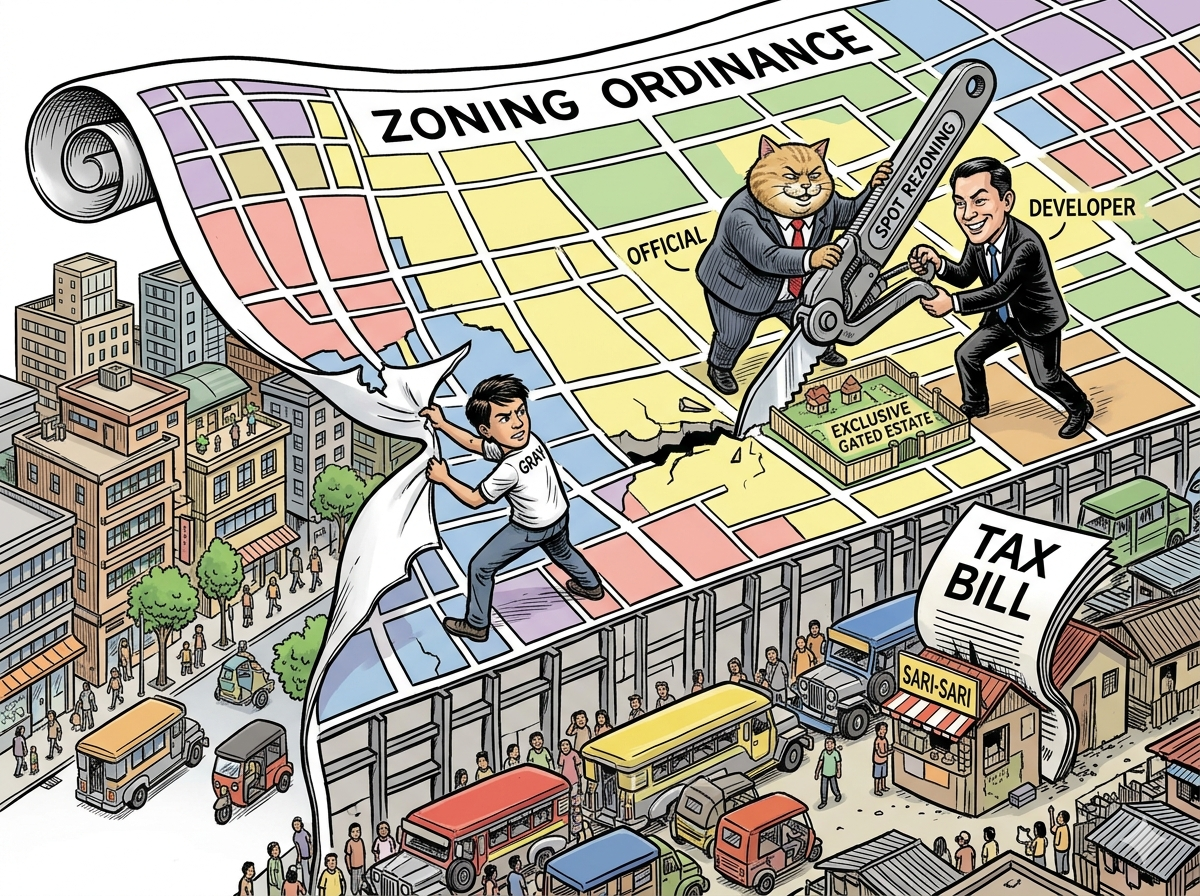
Rethinking Philippine urbanism through Nolan Gray’s "Arbitrary Lines"
While the CLUP is intended to be a visionary document, it is frequently reduced to its zoning component: a static, color-coded map attached to the local ordinance that attempts to freeze a city in time. This approach treats the city like a machine with fixed parts rather than a living, breathing organism. When we prioritize the rigid boundaries of a zone over the actual needs of the people, we end up with "arbitrary lines" that ignore how cities actually grow.
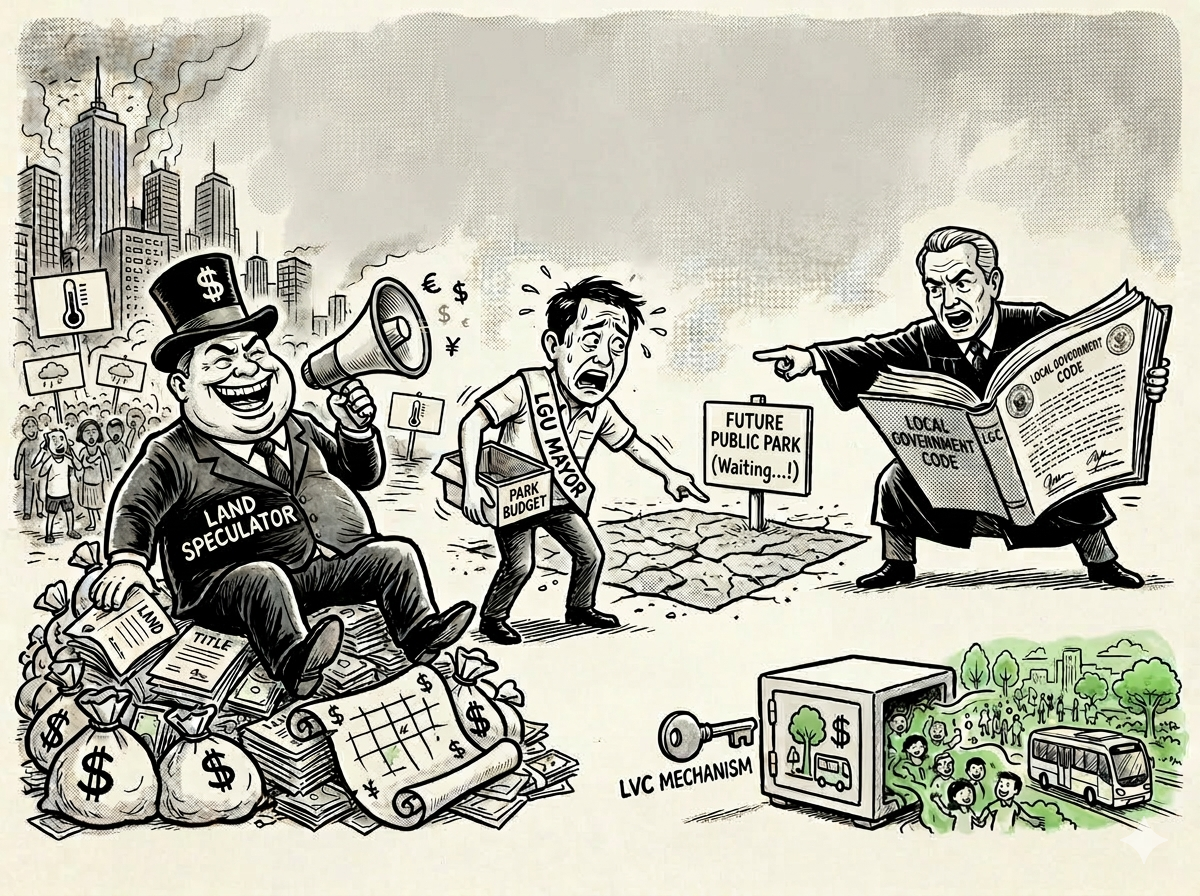
Public risk, private profit: Unearned increment and land value capture
When an LGU signals where a new highway will run, where a government center will rise, or where a commercial hub will be zoned, speculators move with predatory speed. They engage in "land banking" by purchasing vast tracts of peripheral land at current prices and simply holding them. They do not build; they do not improve; they do not create jobs. They wait for the public to do the work. This is the central irony of urban planning: the very transparency meant to foster orderly growth is the same tool used by private interests to make that growth unaffordable for the public.